
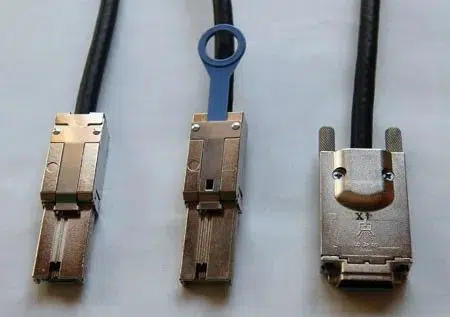
Introduction
Your choice of SAS cable assembly is of great importance to the performance of your storage system a single misstep can result in signal loss, bottlenecks and data errors that will cripple your servers or RAID systems. I have observed with my own eyes that a poorly matched cable can reduce throughput by 30-percent or even more, and thus a fast SAS-4 system can be reduced to a slow bottleneck. The good news? With the appropriate knowledge, it is easy to circumvent these traps.
This is a full-fledged buyer manual, guiding you through all that you should know: what connector type you need and what bandwidth rating, what shielding and length restrictions, and quality standards. You will also Be in a position to tell specifically how to choose an SAS cable assembly that guarantees high-speed and reliable transfer of data in your servers, RAID systems, and enterprise storage solutions.
Why Choosing the Right SAS Cable Assembly Matters
Serial Attached SCSI, or SAS, is the foundation of high-performance storage and drives the enterprise servers to the largest data centers. SAS assemblies are unlike simple SATA cables in that they support many drives at the same time and can operate faster and more reliably, such as SAS-3 of 12 Gbps/lane or even SAS-4 of 22.5 Gbps. This is the catch however, with the finest controller being useless without an excellent SAS cable assembly.
The quality of cables has a direct effect on the integrity of the data that is delivered by SAS cables. Inadequate shielding allows the electromagnetic interference (EMI) to creep in and leads to bit errors, resulting in retransmission and slows down your system. This may translate to hours of downtime in rebuilds in a RAID array. I have worked on projects in which the upgrading of cables properly tested enabled storage throughput to increase by 25 points, by the mere removal of signal degradation. In the case of storage system cabling, it is not merely about linking drives, but maintaining peak performance in high load operation regardless of whether you are running cloud backups or running an AI workload. Take short cuts and you are courting expensive failures.
Understanding SAS Cable Types and Connector Standards
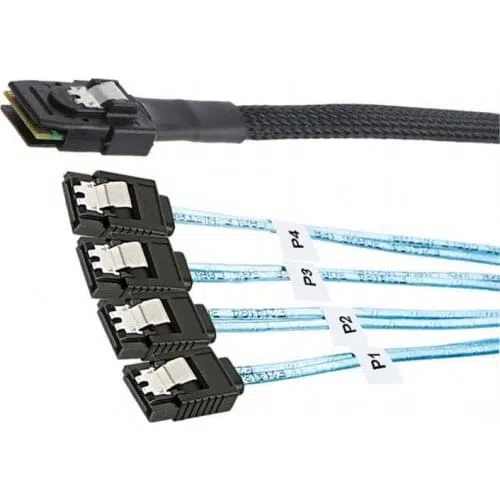
Navigating SAS connector types can feel overwhelming, but it boils down to matching your hardware’s interface to the cable’s capabilities. Let’s break down the most common ones with real use cases.
| Connector Type | Speed Support | Internal/External | Applications | Key Advantage |
| Mini SAS SFF-8087/8088 | Up to 6 Gbps (SAS-2) | Both | Legacy servers, external enclosures | Cost-effective for older RAID systems |
| HD Mini SAS SFF-8643/8644 | Up to 12 Gbps (SAS-3) | Both | Modern data centers, HBA controllers | Compact for dense rack setups; mini SAS vs HD mini SAS winner for speed |
| Slimline SAS SFF-8654 | Up to 22.5 Gbps (SAS-4/PCIe Gen5) | Internal | Next-gen NVMe storage, PCIe backplanes | Future-proof for ultra-high bandwidth |
| HD Mini SAS to SATA Breakout | 12 Gbps SAS / 6 Gbps SATA | Internal | Mixed-drive RAID arrays | Connects SAS controller to SATA SSDs/HDDs |
For example, if you’re building a Dell PowerEdge server with an LSI RAID controller, go for SFF-8643 internal cables—they’re the sweet spot for mini SAS vs HD mini SAS comparisons in most setups. SFF-8087 still works for budget external JBODs, but upgrading to SFF-8643 slashes latency. Always double-check your motherboard or HBA specs; incompatibility here is the #1 reason for SAS cable compatibility headaches.
Key Factors to Consider When Selecting SAS Cable Assemblies
Selecting a suitable SAS cable assembly is no trial of thumb, but using the checklist in this SAS cable selection guide, one can get it right in any case:
- Bandwidth and Protocol Compatibility: Dress the part of your SAS generation. SAS-2 (6 Gbps) basic servers; SAS-3 (12 Gbps) mid-tier RAID; SAS-4 (22.5 Gbps) bleeding-edge storage. Mismatch? Your system decelerates automatically.
- Type of Connector: Both ends must be the same- controller to SFF-8643, drives to corresponding breakouts. Pro tip: SAS vs SATA errors can be avoided by using connectors with keys.
- Length and Signal: Ideally internal cables should not exceed 1m (3ft) because it reduces attenuation. More than that, signals attenuate, I have found out 15 per cent attenuation at 2m in unshielded runs.
- Shielding / EMI Protection: Double shielded (foil, braid) is required in EMI shielding of SAS cable exploits. This eliminates crosstalk between the adjacent cables in noisy data centers.
- Quality Certifications: Demand UL safety, ROHS/REACH environmental compliance. These are assurance that the cable cannot melt due to the heat or leech toxins.
- Reputation and Testing of Manufacturers: Aim at high speed SAS cable tests such as 100 percent continuity, 85 ohms +10 ohms impedance checks and eye-diagram. Respected manufacturers of SAS cable supply test reports – insist on them!
Personally, when retrofitting a 48-drive RAID on a financial customer, concentration on these factors reduced the error rates by one-half to none. It is the distinction between mission critical reliability and good enough.
Common Mistakes When Choosing SAS Cables

Pros are no exceptions, here are the traps that get most SAS connections trouble-shooting calls:
- Combining Compatibility Connectors: SAS in SATA? Instant no-go. The pins are broken by being forced with SAS cables, which are keyed uniquely.
- Neglecting Cable Length and Signal Loss: The 3m cable that comes with that “bargain”? It adds 20-30% attenuation at 12 Gbps, and chokes your SAS-3 array.
- Cheap, Untested Cables: Imported and low-name products tend to silence EMI shielding of SAS cables, causing unreliable rebuilds of RAID.
- Failing to check SAS Version Compatibility: SAS-4 cables are not a Silver Bullet to upgrade your SAS-2 controller–make sure you check specs first to prevent SAS cable compatibility problems.
I once did some trouble-shooting on a data center crash: it turned out that an error on 24 drives was caused by a 2m unshielded SFF-8087 due to EMI. Swapped to 0.5m HD Mini SAS? Problem solved in 30 minutes. Learning: Take a test sample on what you want to buy massively before buying.
Comparing SAS Cable Assemblies by Application
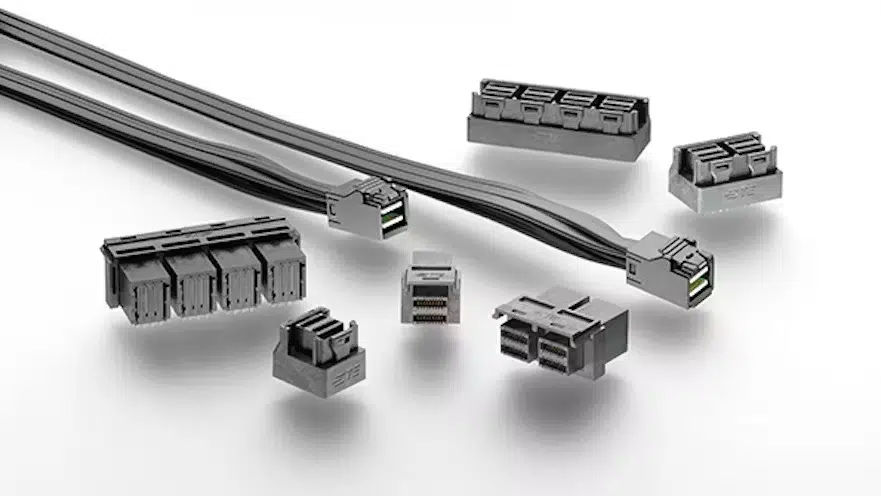
The ideal SAS cable assembly varies by use—here’s a practical breakdown with real-world examples:
- Enterprise Servers: Prioritize durability and impedance control. For HPE ProLiant setups, SFF-8643 cables with rugged overmolding handle 10,000+ mating cycles. SAS cables for servers shine here, supporting 12 Gbps without hiccups.
- Data Centers: Slim, flexible designs for airflow. Slimline SFF-8654 assemblies in Cisco UCS racks reduce bundle thickness by 40%, easing cooling in 42U cabinets. Data center cable assembly pros? Density without drama.
- Workstations / RAID Systems: Balance cost and performance. Breakout cables for Areca controllers connect one SAS port to four SATA drives—perfect for video editing rigs. RAID storage cables like these deliver 48 Gbps aggregate bandwidth affordably.
Take a recent project: We spec’d custom SFF-8643 assemblies for a VMware cluster. Result? 15% faster VM migrations, all thanks to application-matched shielding and length.
Custom SAS Cable Assemblies — When to Consider OEM/ODM Options
Readymade works with simple, but special SAS cable OEM is being brilliant with unique demands. Require 0.75m coloured RAID swap lengths? Or upgrade SFF-8643 to SFF-8087 legacy? This is where the China professionals in SAS cable such as Dongguan Kingda fit in.
Benefits include:
- Precise Specs: Within days prototype, and full high speed SAS cable test.
- Scalability: 100-piece to 10,000 of-the-shelf globally.
- Cost Reduction: Custom data cable assembly bypasses middlemen reducing 20-30% vs stock.
In the case of a cloud provider customer, we developed fire-safe data hall LSZH-jackets cables- they can be delivered in RoHS-compliant and tested in their entirety. Where high accuracy in your storage hardware is required, OEM/ODM is not something luxurious; it is a necessity in the long-term efficiency.
Conclusion – Finding a Reliable Partner
In conclusion: Select certified, tested and application specific SAS cable assemblies to achieve stability of performance and greater equipment life. Match connectors, with cap length of 1m, require twice the shield, and confirm SAS compatibility- boom your storage system will run like a dream.
Need to have the best custom SAS cable assemblies? Talk to Dongguan Kingda Electronic Technology Co.,Ltd so as to get professional, tested, and compliant solutions. Having over 12 years of engineering SAS cables with high speed, we are your provider of servers, RAID and more.