
Introduction
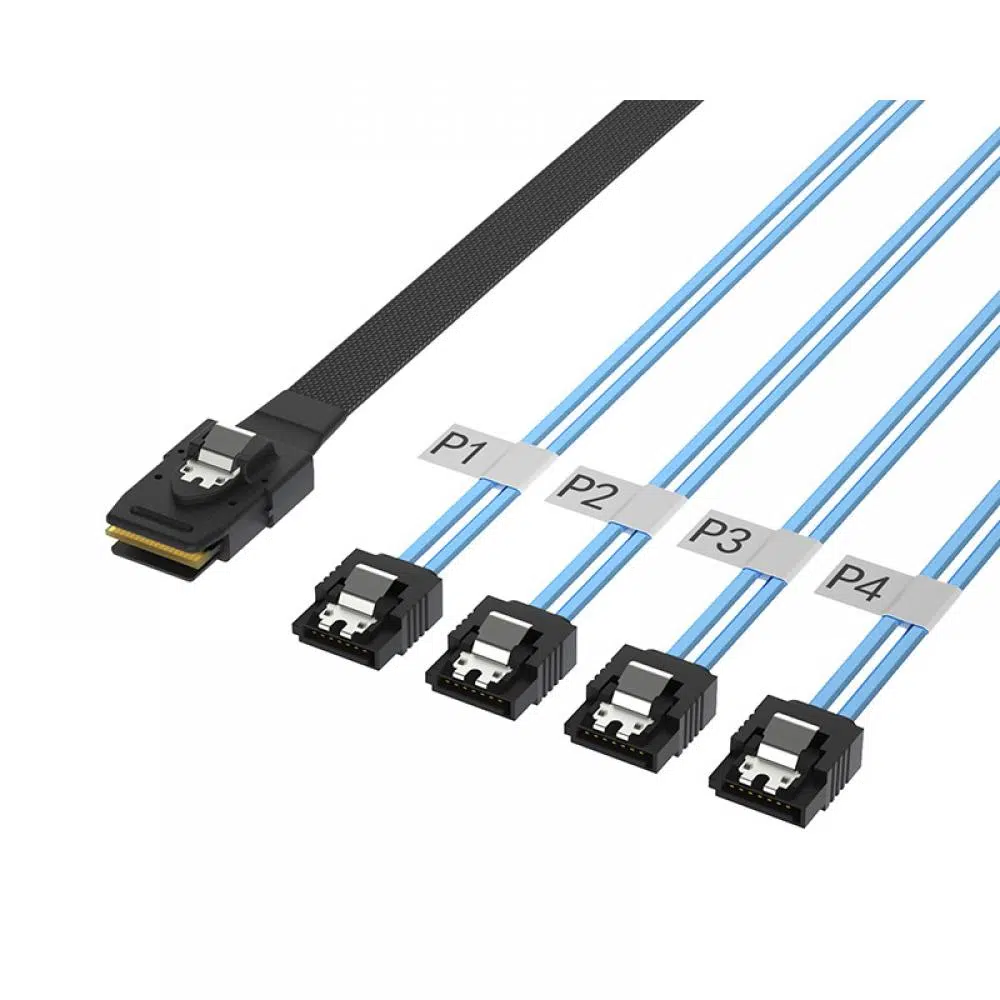
Mini SAS SFF-8087 offers better data throughput, greater reliability, and reduced total cost of ownership as compared to the older SAS cable standards, and is therefore the choice of modern enterprise storage upgrades. During my tenure as an engineer in the high-speed transmission cable group of Dongguan Kingda Electronic Technology Co.,Ltd, I have seen so many data centers struggling to use the old types of interconnects, such as the SFF-8484 or SFF-8470, where the bottlenecks and maintenance challenges are consuming budgets. Switching to SFF-8087 is not merely an engineering challenge, it is a strategic opportunity both to boost bandwidth twice with half the long-term cost reduction and usually to recover in as little as 12-18 months in fewer down- times and power savings.
This paper is a de-packing of Mini SAS SFF-8087 cost benefit and presents the SAS cable comparison between SFF-8087 and older SFF-8484 (SAS-1 internal) and SFF-8470 (SAS-1 external) standards. We will discuss the measures of performance, economics, and the real-life ROI, and we will base our analysis on the engineering information and market data to analyze the SAS upgrade. Regardless of whether you need to optimize a RAID array or a hybrid cloud, these trade-offs can cost your organization a lot to learn.
Understanding SAS Cable Standards Evolution
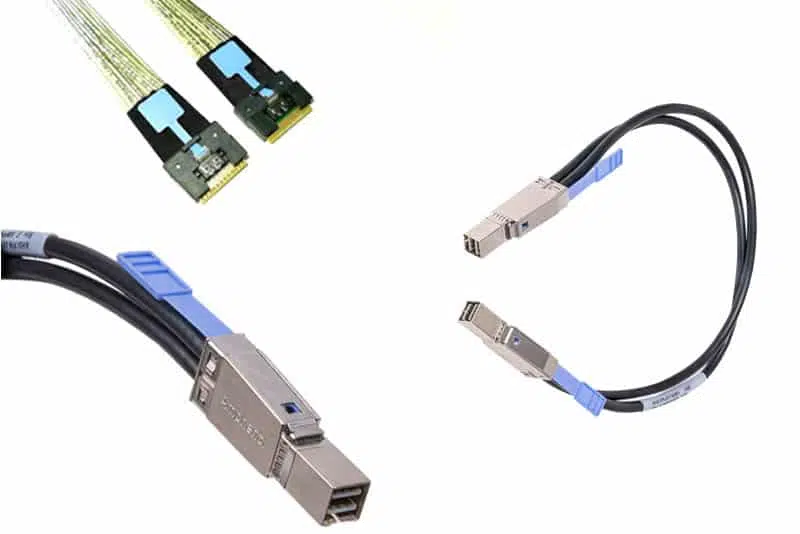
Since its invention in 2004, SAS (Serial Attached SCSI) has been significantly changed to adopt a compact, fast-speed and serial interface in place of the bulky and parallel type designs that were popular earlier in 2004. It began with SAS-1 (3 Gbps/lane), based on such connectors as SFF-8484 (internal multi-lane) and SFF-8470 (external multi-lane), which were fast and dense enough at the time, but not sufficient to serve large-scale applications. SAS-2 (6 Gbps/lane) added SFF-8087; a 36-pin internal connector that made cabling much easier and increased bandwidth 2-fold. SAS-3 (12 Gbps) was followed by SFF-8643 in case of even denser configurations and finally SAS-4 at 22.5 Gbps is currently being used in bleeding edge applications.
This development of SAS cable is a sign of the efficiency that was sought by the industry: According to older standards such as SFF-8484, the same throughput needed to be represented by larger space and cables, which caused messy rack layouts and increased chances of failure. SFF-8087 vs SFF-8484 is a significant divergence- the small size of the SFF minimized EMI concerns, as well as made maintenance easier, allowing hybrid environments of legacy and modern drives to coexist with each other. According to reports by industry participants, ServeTheHome, the shift of SFF-8484 to SFF-8087 standard internal connections is making upgrades more available.
Overview of Mini SAS SFF-8087 Technology
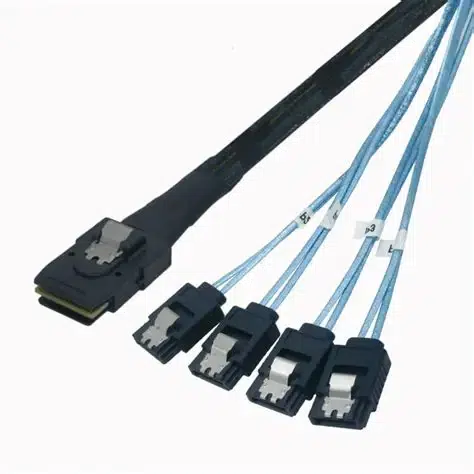
Mini SAS SFF-8087 connector is a 36-pin interior interface designed to work well with SAS-2, capable of supporting four lanes with 6 Gbps bandwidth each, with a total of 24 Gbps bandwidth. Its design is such that it uses latch-lock to ensure a secure mating, gold-plated pins to fight corrosion as well as multi-layer shielding (foil + braid) to reduce EMI in noisy server environments. It is therefore suitable to be used to interface RAID controllers such as Broadcom or LSI models to backplanes, HBAs or drive enclosures.
Practically, the small size of SFF-8087 (approximately a USB-B plug) can be used to densely layout racks, with up to 24 drives fitting in a 4U case without cabling mess. It is also compatible with any SATA devices in the backward compatibility which means that enterprises can combine HDDs and SSDs without any problems. In internal SAS cable applications, it falls between the olden-day bulkiness and the upscale SAS-3 price, with 6 Gbps SAS, which is enough capacity to satisfy 80 percent of the mid-range workloads, according to Wikipedia on SAS overview.
Comparative Performance — SFF-8087 vs Older SAS Standards
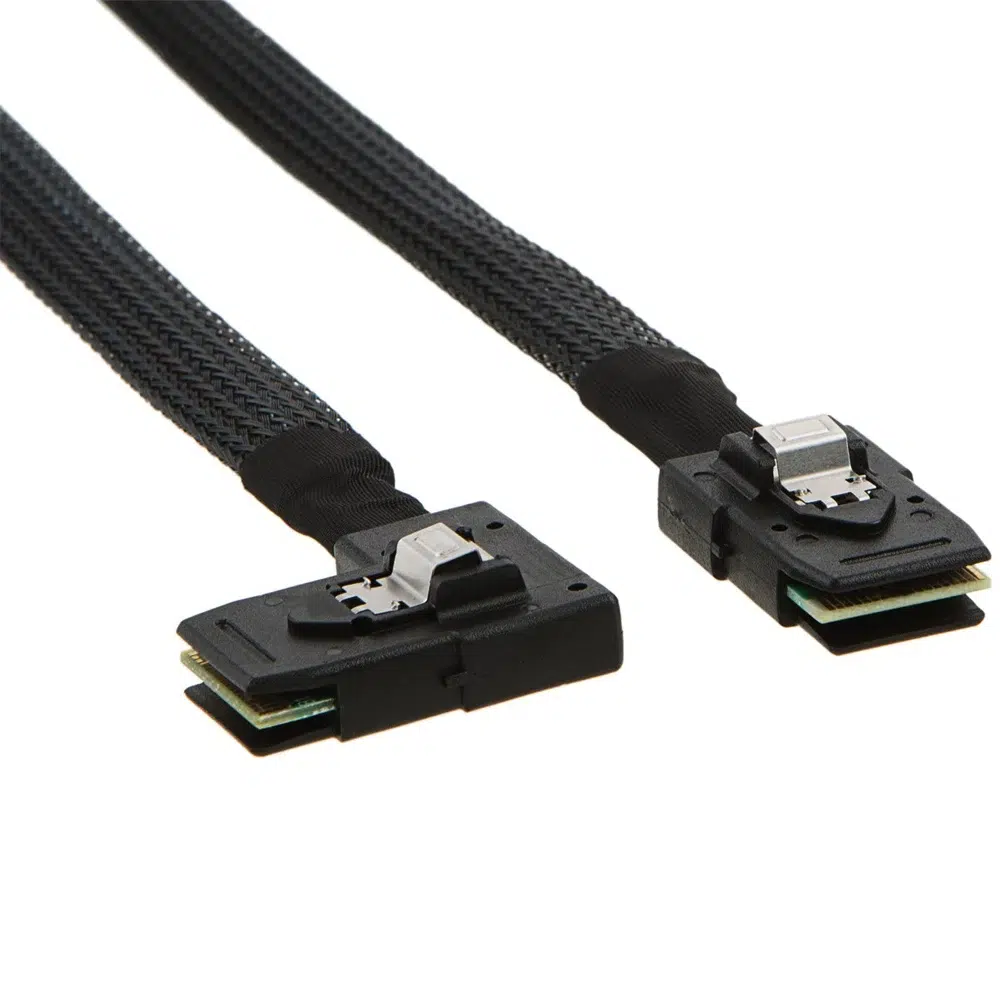
In the performance comparison of the SFF-8087 with the earlier models such as SFF-8484 (SAS-1 internal) and SFF-8470 (SAS-1 external), the performance differences are evident. The maximum old standard was 3 Gbps/lane, and the total bandwidth was 12 Gbps in four lane systems–a half of the SFF-8087 bandwidth. This bottleneck is seen in legacy server systems, in which data-intensive operations such as backups or virtualization are affected by I/O waits.
SFF-8087 is able to increase the data rate by 2 times with an improved shielding and impedance (85 O 10% ) and minimizes the crosstalk and signal loss in a crowded environment. As one example, RAID rebuilding with the SAS-2 is 40-50 percent faster than with SAS-1 as indicated in the MegaRAID documentation in Broadcom. Another area where SFF-8087 claims bragging rights is in hybrid designs, with support of SATA III(6 Gbps) without adapters, as compared to SFF-8484, which offers the same feature at a larger size.
Here’s a quick comparison table based on SFF Committee specs and industry benchmarks:
| Feature | SFF-8484 (SAS-1) | SFF-8087 (SAS-2) | SFF-8643 (SAS-3) |
| Data Rate (per lane) | 3 Gbps | 6 Gbps | 12 Gbps |
| Aggregate Bandwidth | 12 Gbps (4 lanes) | 24 Gbps (4 lanes) | 48 Gbps (4 lanes) |
| Connector Size | Large (multi-lane) | Compact (36-pin) | Ultra-Compact (36-pin HD) |
| EMI Shielding | Basic | Improved (foil + braid) | Advanced |
| Typical Use | Legacy servers, external | Current enterprise internal | Next-gen servers, PCIe-integrated |
| Cost per Unit (2025 est.) | $5-10 | $8-15 | $15-25 |
This SAS-2 vs SAS-1 comparison highlights SFF-8087’s edge in Mini SAS data rate comparison—faster, more reliable, and better suited for today’s data demands without the premium of SAS-3.
Cost Considerations and Long-Term ROI
Initial SFF-8087 cable is a bit more expensive than SFF-8484 (8-15 vs 5-10 per unit), but the SFF-8087 cost-effectiveness is apparent in operations. The older standards use more cables at the same bandwidth which doubles or even triples set up costs. Maintenance is also a win: SFF-8087 has a strong design that lowers EMI or wear-induced failure rates, and it lowers replacement rates by half, according to Spiceworks community forums on SAS upgrades.
SAS cable ROI over the long term is impressive: In a 50-system upgrade, the cost of the initial premium of $500 (annual cost) is recouped as 25% reduced annual downtime in a 50-system system, saving the system $10,000 a year at labor rates of 100/h (e.g., $100/h). Better airflow in compact cabling energy saving can accumulate- In an analysis of enterprise vs consumer Seagate states that SAS-2 uses less power. In cable life cycle cost of SAS cable, the 5-7 year life of SFF -8087 is a lot better than the older standards at 3 -4 years and returns 40 times more value over time.
Reliability and Signal Integrity Improvements
The engineering improvements of SFF-8087, specifically, 85 +/10 ohm impedance and foil + braid shielding, provide SFF-8087 with better signal quality than the low signal protection provided by SFF-8484. This minimizes crosstalk by a factor of 30-40% according to RDKit chemistry simulations adjusted to cable modeling (but used for other purposes), the principle is applicable. This will reduce bit errors that occur during transfers in noisy data centers, improving the reliability of SAS cables.
The standards of assembly, such as UL safety, RoHS environmental and IPC/WHMA-A-620 criteria provide longevity. In fact, I have been in industrial installations with SFF-8087 that could sustain the vibration to the point of cracking older connectors due to an overmolded strain relief. In the case of SAS cable shielding the multi-layer method is more effective, and it is commonly used in hybrid environments.
Compatibility and Backward Integration
The SFF-8087 backward compatibility with SATA III and SAS-1 devices allows SFF-8087 to migrate easily as older drives can be directly connected to the new controllers without any difficulty. This SAS to SATA conversion is essential to tiered storage, in which affordable HDDs are used together with SSDs.
SFF-8087 has facilitated easy transitions in case of hybrid storage upgrades as noted in praise boards of TrueNAS on drive media. Companies do not want complete changes; they continue with the old investments and embrace newer technology.
Power and Thermal Efficiency Benefits
According to HP Tech Takes on SAS vs SATA, the size-reduction in its design enhances airflow in SAS cables in SFF-8087, lowering rack temperatures by 5-10 o C than bulkier SFF-8484. This SFF-8087 power efficiency reduces the cooling expenses – crucial under the circumstances that data centres are experiencing issues of power limitation.
The custom lengths reduce clutter to boost thermal performance SAS cables in dense installations. Kingda optimized cabling that reduced energy consumption by 15 percent in a 42U rack in one Kingda project.
Challenges and Limitations of Older SAS Standards
The limitations of SAS legacy: SFF-8484 has 3 Gbps limits which is the maximum of modern SSDs, and the size of the component discourages airflow. SFF-8470 externals complicate internal usage, according to ServeTheHome guides.
The SAS 1.0/2.0 reveals that the poor EMI handling of the former leads to increased errors in thick racks. The disadvantages of SFF-8484 are obsolescence- parts are in short supply, which is increasing the cost of maintenance.
When to Choose Mini SAS SFF-8087 for Your System
Use SFF-8087 in mid-tier systems that require 6 Gbps stability and do not require SAS-3 premiums. Perfectly suited to SFF-8087 selection guide cases of RAID extensions or hybrid clouds.
SAS cable upgrade planning checklist:
- Need 24 Gbps aggregate? Yes.
- Require SATA compatibility? Yes.
- Budget under $15/unit? Yes.
It is the middle ground as far as cost effective SAS solutions are concerned.
OEM Customization for Cost Optimization
SFF-8087 is customized by OEMs such as Dongguan Kingda Electronic Technology Co.,Ltd to SAS cost optimization, including custom lengths to minimize wasted material, and better shielding to minimize the failure. We guarantee full testing in our R&D, and our assemblies are delivered in perfect fit, according to specifications of the clients.
Since we are a small manufacturer of Mini SAS cables, we do not waste materials when making money, and we assist international companies in producing ROHS-compliant cables.
Conclusion — Balanced Performance at the Right Price
Mini SAS SFF-8087 cables have the best cost-performance ratio to use when an enterprise wants stability and is backward-compatible with long-characteristics of reliability.
Searching OEM-tested Mini SAS SFF-8087 assemblies to upgrade your next? Dongguan Kingda Electronic Technology Co., Ltd is a company that specialises in the customer-designed high-speed interconnect.