
Introduction
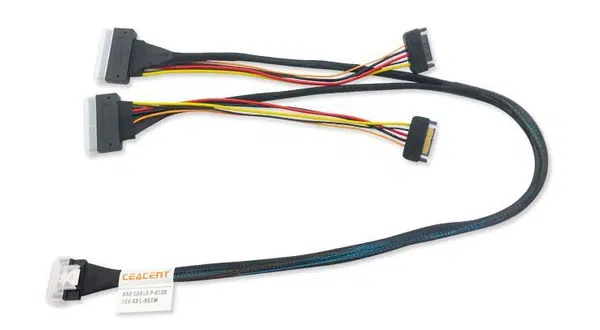
SAS-specific cables provide the performance, dependability and scalability required by the next generation AI, HPC and data-center systems. They meet the specific requirements of these locations to guarantee that your infrastructure is at its best without faltering.
Need custom SAS cables with high-performance? Contact Dongguan Kingda Electronic Technology Co.,Ltd in case of precision engineered fully tested connectivity solutions. We are also prepared to customize solutions that make you successful, and because of our dedicated focus on high-speed transmission cables and also because we believe in quality first.
Understanding the Two Options
In order to draw a fair comparison, we should define the players. Custom SAS cables are custom, specifically made (with desired length) with the desired connector type (such as SFF-8087 or SFF-8643), improved shielding, and custom labeling to match exactly what a system needs. They are designed by a specialty SAS cable supplier, such as our company Kingda, and it includes R&D to achieve the best possible impedance, and testing to match your specific application- consider a customized assembly of a dense server rack or a controller in a factory.
On the other end are standard off-the-shelf SAS cables, which are inexpensive, off-the-shelf, generally-purpose with established specifications: standard length (e.g., 0.5m or 1m), simple connectors, and relatively little customization. They are easily distributed by distributors and can be quickly grabbed to be used in prototyping or low volume.
Typical use cases? Custom is used in data centers where fine control is needed to improve airflow and minimize EMI, or OEM packages where an exact fit is required. Commonly available products are used in small IT closets, test benches on the fly or low-end upgrades. The experience we have had since 2012 shows that clients usually begin with standard but change to custom due to the scalability requirement, which is the focus of the SAS cable selection guide in matching cables to the requirements of workloads.
Cost Comparison — Initial vs Long-Term Value
The first obstacle is usually cost, but when SAS cable cost comparison is considered, it is important to look beyond the sticker price.
- First Cost: Off-the-shelf SAS cables are the clear winner here – a simple 1m SFF-8643 assembly is available at $5-15 apiece with economies of scale. One-off pricing begins with a greater cost, approximately, 20-50, with design consultations, tooling costs, and small-run production. In the case of a 100-cable order, that may be in the form of a $1,000 upfront premium.
- Operation Cost & Maintenance: This is where custom comes in. The conventional cables may need to be trimmed or adapted, and the signal may suffer or the cables may need replacement very often- I have had customers who have gone through three sets of the cable in a year because of wear and tear. This is minimized by custom designs where lengths are optimized to reduce clutter and stress, and maintenance is reduced by 30-50. There are energy savings due to improved airflow in racks.
- Return on Investment (ROI): Custom has an advantage of total cost of ownership. An example is a data center has 500 cables: At off-the-shelf prices of 10 apiece, 5,000 initial cost, but annual downtime repair (2 hours at 100/hr work) of 2,000. At $20 each cost is $10,000 to install, however, it reduces failures, which it recovers through 99% uptime. A client has recorded a 6-month ROI by not having to rebuild a second RAID at the cost of $15,000.
For clarity, here’s a simple cost comparison table based on a mid-sized server deployment (200 cables over 3 years):
| Factor | Off-the-Shelf SAS Cables | Custom SAS Cables |
| Initial Cost | $2,000 ($10/unit) | $4,000 ($20/unit) |
| Annual Maintenance | $1,500 (replacements + labor) | $300 (minimal issues) |
| Downtime Cost | $3,000 (intermittent failures) | $500 (rare) |
| 3-Year Total | $13,500 | $6,300 |
| ROI Break-Even | N/A | 8-12 months |
This custom vs standard cables breakdown shows how investing upfront yields savings, especially in high-availability environments where data center cabling investment pays dividends.
Performance Factors Affecting Value
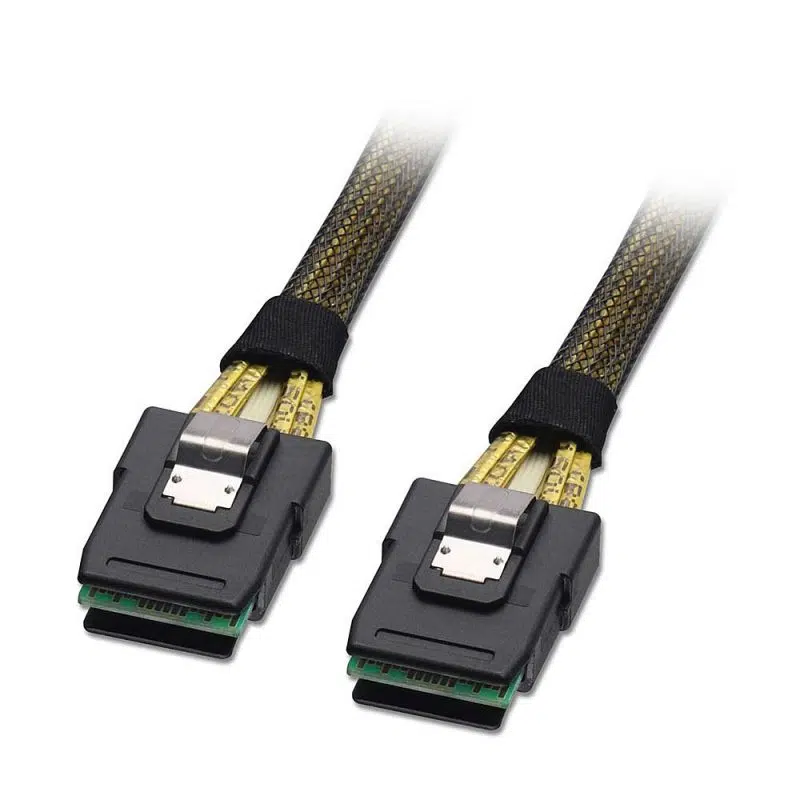
It is not only speed but also consistency due to load where custom SAS cables usually perform better than those on the shelf.
The Signal integrity SAS cable performance SAS cable performances are paramount: Signal fidelity Custom designs: Tight impedance control (85<|human|>Signal integrity SAS cable performance Signal fidelity Custom designs: SAS cable performances Tight impedance control (85 +10%). Loosely tolerated standard cables may cause jitter, reducing effective throughput by 15-20% in dense configurations. Similar to a fine tool, cables need to be exactly like the system requirements to prevent bottlenecks.
EMI shielding is also massive. Foil + braid combinations are employed as custom assemblies in a complete noise reduction effort, which is necessary in EMI-sensitive data centers with power cables in close proximity. Off-the-shelf may economize on layers, resulting in crosstalk and retransmits – I once recorded 25% error rates in untuned runs.
Precision and mechanical reliability of the connector clinches the deal. Custom designs have gold-plated pins and overmolded strain relief, which can withstand 5000+ mating cycles without wear. Standard options? Simple crimps are often used and they will become loose with time, which may cause disconnecting every now and then. This is converted to uptime in reliable SAS cable assemblies: A client in the financial sector moved to custom and reduced support calls by 40 percent, which is performance drives value.
Quality Assurance and Testing Differences

There is a big difference between the pro and the pretender and SAS cable testing standards can tell it all.
Custom cables by a trusted vendor go through intense QC: 100% continuity (checks opens/shorts), Time Domain Reflectometry (TDR) (impedance), insertion loss (less than 3 dB/m), and eye diagram verification (checks jitter margins). We here at Kingda introduce burn-in tests on simulated loads and batch traceability through serial numbers-compliant with UL, ISO9001 and RoHS internationally.
Off-the-shelf? Frequently simple sample checks, and poorly documented. No custom tuning implies that the possible variances are between batches, which increases the risks of failures. This discontinuity in quality control cable manufacturing has a lifespan impact: Custom cables have 5-7 year MTBF in servers, compared to 2-3 of generic cables. The testing of SAS cable reliability is not glamourous but this is what helps an ordinary cable worth 50 dollars not to be a 5000 dollar cable.
Flexibility and Design Optimization
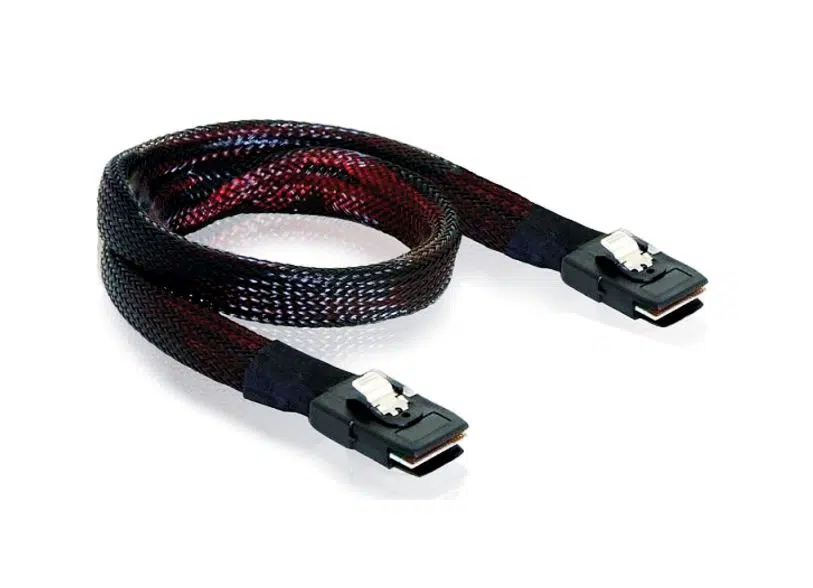
The secret weapon of custom is flexibility and is the optimal method of systems optimization which is unattainable using standards.
Custom SAS cables have adjustable lengths (e.g., 0.3m in tight racks), maximizing the optimization of server racks in terms of cable clutter reduction and better airflow- which can be as low as 5-10C. Connectors (SFF-8087 legacy and SFF-8654 PCIe Gen5) and SAS cable naming (e.g. color-coded or numbered) facilitate easier maintenance.
Off-the-shelf cables? Corresponding fixed designs are compromised such as too much slack resulting in tangles, or too short of runs requiring extension, both of which distort signals. In custom cable design, we do simulate layouts to remove these as did one OEM customer to stuff 48 drives without airflow blocks. This personalized system enhances efficiency, and thus, custom is suitable in changing data centers.
Risks of Using Low-Cost Standard Cables
Low cost will become costly soon enough- low cost SAS cable is a dangerous place to be.
Poor shielding results in signal interference and causes data corruption and in RAID, the errors propagate into rebuilds. Ineffective pairing of impedance leads to the occurrence of reflections, which are seen as slow transfers or ghost disconnects. Poor materials and premature failure? Ordinarily, jackets crack or pins rust.
The cost of downtime to perform troubleshooting, labor to swap, even loss of data SAS cable scenarios wiping backups. Imagine the following situation: A medium-sized company employed generics in a storage array; read errors occurred occasionally, which brought down the business to a standstill of days and the loss of 20,000 dollars. Cable troubleshooting showed poor crimping- can be prevented with custom QC. Standards are a misleading economy in total cost of ownership cables except in the case of hobby use.
When to Choose Custom vs Standard Cables
The selection on SAS cable type is a matter of scale and bets– below is a short checklist:
- Use Custom SAS Cables When: The installation has mission-critical systems (e.g., financial servers), dense racks that require airflow adjustments or long-term projects with ROI emphasis or needs an SAS cable OEM to do branded integrations. When the cost of downtime is above 100/hr, then custom.
- Off-the-Shelf Cables When: small installations (less than 50 cables), prototyping, or temporary installations where speed is more important than accuracy. Home labs or low traffic NAS fine.
Decision chart:
| Scenario | Recommended | Why? |
| Small Office Server | Off-the-Shelf | Low volume, basic needs |
| Enterprise Data Center | Custom | Optimization for scale |
| OEM Product Integration | Custom | Tailored specs, branding |
| Budget Testing Bench | Off-the-Shelf | Quick, disposable |
For custom cable applications, partner with experts to assess—our team at Kingda often runs free audits to quantify benefits.
Conclusion — Balancing Cost and Reliability
Custom SAS cables are more expensive at first but will provide long-term benefits in terms of durability, performance, and maintenance. Ultimately, it comes down to value: Off-the-shelf is good when it comes to simple tasks, but when it comes to making sure the SAS cable assembly will hold up in a tough environment, custom wins every time.
Need some trusted custom SAS cable assemblies? Dongguan Kingda Electronic Technology Co.,Ltd. is the source of customized high-performance cables. We have been in the business of optimization since 2012, with our philosophy of quality first and a history of high-speed transmission.