
Author name: Wang Palle

As the third employee of Dongguan Kingda Electronic Technology Co.,Ltd, Palle Wang has grown together with the company since its early days. She currently serves as Blog Editor, where she oversees the creation and publication of technical content related to high-speed transmission cables, including MCIO PCIe Gen5, SAS, OCuLink, QSFP/SFP, and USB4 solutions. With a strong background in technical writing and digital content management, she ensures that Kingda’s blog not only reflects the company’s engineering expertise but also provides valuable insights to global customers, engineers, and partners. Her work contributes to Kingda’s mission of building trust, authority, and transparency in the high-speed cable industry.

Wang Palle
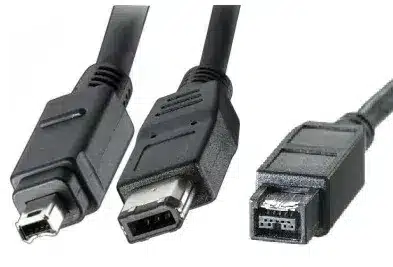
FireWire connectors including mini, 6 pin, and 9 pin types used in IEEE 1394 standard
Uncategorized

What Is FireWire? The Legacy of High-Speed Data Transfer Technology

FireWire (IEEE 1394) was a high-speed data transfer standard developed by Apple that controlled professional audio and video markets throughout the 2000s, offering superior performance to first-generation USB components, including the ability to daisy-chain, hot-plug, and transfer isochronous data. FireWire was later supplanted by USB, which is both technically inferior (only up to 800 Mbps) and can only support 63 devices without a hub, but nonetheless, its innovations are still visible today in newer connectivity technologies like Thunderbolt and USB-C.
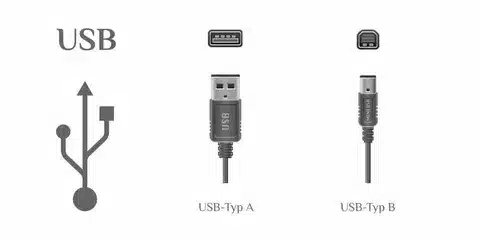
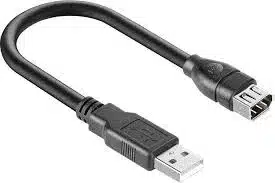
Diagram comparing USB Type A and USB Type B connectors with labels
Uncategorized

FireWire vs USB: Why the Better Tech Lost the War

The guide explores the rivalry between FireWire and USB, explaining why FireWire—though technically superior in speed and consistent performance for its time—ultimately lost to USB in the consumer market. FireWire offered faster sustained data transfers, especially valuable for video editing and professional applications, but it was more expensive to implement, had higher licensing fees, and lacked widespread manufacturer support. USB, by contrast, was cheaper, backward-compatible, and quickly became the universal standard across PCs and peripherals, gaining mass adoption despite lower early speeds. Over time, USB evolved into faster versions like USB 3.0 and USB-C, leaving FireWire obsolete. The article highlights how cost, compatibility, and ecosystem adoption mattered more than raw performance, shaping the future of connectivity.

Black FireWire to USB adapter cable designed for connecting older FireWire devices to modern computers with USB ports
Uncategorized

FireWire to USB: Complete Guide for Legacy Device Connectivity

The most notable aspects of FireWire to USB connectivity include understanding that there are no direct adapter solutions available because of the incompatibility of the protocols, considering the potential sources of solutions like PCIe cards and Thunderbolt adapters, adherence to the correct installation process to guarantee reliability, and planning of long-term support of legacy devices, as the technology is subject to further changes.

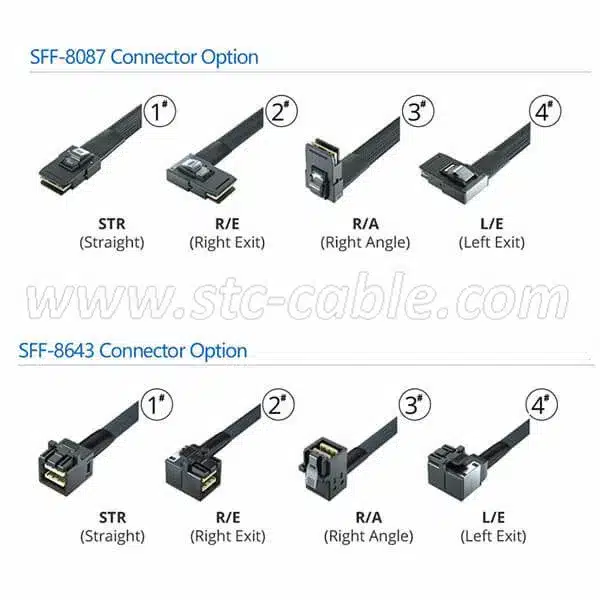
Diagram showing SAS connector types SFF-8087 and SFF-8643 with variations such as straight, right exit, right angle, and left exit
Uncategorized

The Most Common Types of SAS Cables & Connectors (Explained)

Storage system performance and reliability depend on the choice of SAS cable. The most common types of connectors are standard SAS (SFF-8482), Mini-SAS (SFF-8087), and Mini-SAS HD (SFF-8643/8644) in various speeds and uses. Breakout cables allow flexibility in mixed environments, and appropriate cable choice guarantees the best signal integrity and long-term compatibility in storage deployment in an enterprise.

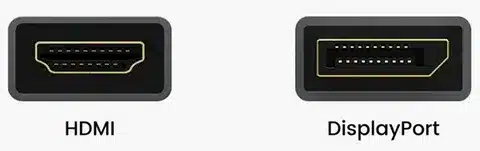
HDMI port compared to DisplayPort port diagram
Uncategorized

DisplayPort vs HDMI: Best Choice for Gaming, Work & Home Theater (2025 Guide)

The guide compares DisplayPort and HDMI to help users pick the best connection for gaming, work, and home theater in 2025. HDMI remains the universal choice for TVs, consoles, and home entertainment, supporting features like 8K resolution, HDR, and eARC for immersive audio and video. DisplayPort, however, is preferred by PC gamers and professionals, offering higher refresh rates, multi-monitor support, and better performance at 4K and beyond, making it ideal for esports, design, and productivity setups. With HDMI 2.1 and DisplayPort 2.1 pushing bandwidth and resolution limits even further, the article concludes that the right choice depends on your setup: HDMI for plug-and-play home theater and consoles, DisplayPort for high-performance PC gaming and professional workstations.

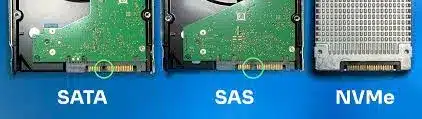
Comparison of SATA, SAS, and NVMe storage interfaces showing different connector types on hard drives and SSDs
Uncategorized

SATA vs SAS vs NVMe: Which Storage Interface Wins in 2025?

The guide compares SATA, SAS, and NVMe to show how storage technologies stack up in 2025. SATA remains the most budget-friendly option, offering reliable large-capacity drives for everyday use, but its speed is limited compared to newer interfaces. SAS continues to dominate in enterprise environments where durability, error correction, and 24/7 workload support are critical, making it ideal for servers and data centers. NVMe, however, has emerged as the clear performance leader, leveraging PCIe lanes to deliver lightning-fast data transfer speeds, ultra-low latency, and superior scalability—perfect for gaming, AI, cloud computing, and high-performance applications. Ultimately, the choice depends on priorities: SATA for affordability, SAS for reliability, and NVMe for cutting-edge speed and future-proofing.

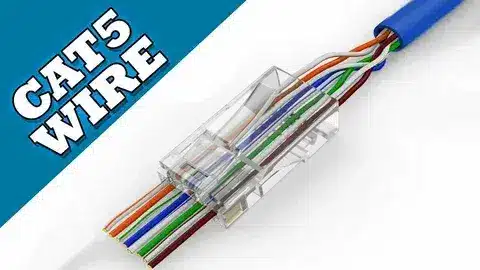
Cat5 cable inserted into RJ45 connector with color-coded wiring aligned for crimpin
Uncategorized

How to Make Cat5e Cable: DIY Ethernet Cable Tutorial

This tutorial walks you through making your own Cat5e Ethernet cable, a cost-effective way to customize cable lengths for home or office networks. It explains the essential tools—such as a crimping tool, RJ45 connectors, and wire stripper—and details the step-by-step process: cutting the cable to size, stripping the outer jacket, arranging the twisted pairs in the correct wiring standard (T568A or T568B), and crimping the connector securely. The guide also provides tips for testing the finished cable with a network tester to ensure reliable connectivity. By following these steps, anyone can create durable, high-performance DIY Ethernet cables tailored to their specific networking needs.

Close up of Ethernet patch cables with RJ45 connectors for reliable connections
Uncategorized

Cat6 Cable vs Ethernet Cable: Understanding the Key Differences

As explained in this article, Cat6 cables are not another type of cable, but a special category of Ethernet cable. The Cat6 is the 6th generation Ethernet specification of 10 Gbps and 250 MHz frequency. The guide not only compares Ethernet cable types (Cat5e, Cat6, Cat6a), but it also dispels some of the common myths surrounding Ethernet cables, provides some advice about choosing between home and business usage, and offers some hints on how to install the cables to ensure the most optimal functionality.

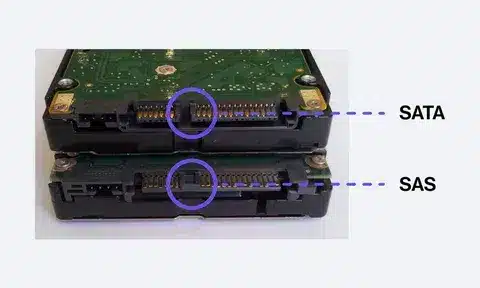
Diagram showing labeled SAS and SATA connectors on storage drives
Uncategorized

SAS vs SATA: Which Storage Interface Wins for Your Needs?

The guide compares SAS (Serial Attached SCSI) and SATA (Serial ATA), two major storage interfaces, to help users choose the right one for their needs. SATA drives are affordable, widely available, and well-suited for everyday computing, offering decent speed and large storage capacity for home users and general business tasks. SAS drives, on the other hand, are built for enterprise environments, delivering faster data transfer rates, higher reliability, longer lifespan, and support for continuous 24/7 workloads. While SAS is the winner for servers, data centers, and mission-critical applications, SATA remains the practical choice for cost-effective storage in personal PCs, laptops, and bulk data archiving. The key takeaway is that the right choice depends on whether you prioritize performance and durability or affordability and capacity.

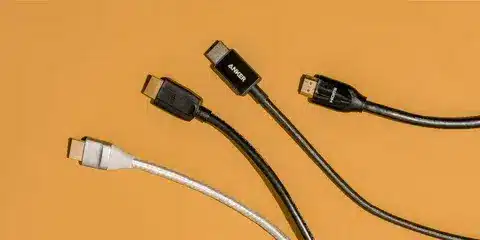
Comparison of HDMI cable types showing variations in design and build quality.
Uncategorized

High-End vs Low-End HDMI Cables: The Truth About Cable Performance

No use spending money on costly HDMI cables, since there are no intermediates in digital signals. You may want to make a study concerning purchasing well certified cables matching its bandwidth requirements, how it was built on investment to the use and save more to invest later in extra higher quality displays and audio device where it counts.

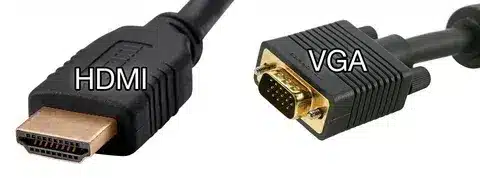
HDMI digital connector compared with VGA analog connector for display connections.
Uncategorized

VGA vs HDMI: Which Connection Should You Choose?

The guide compares VGA and HDMI, highlighting how HDMI has become the modern standard while VGA is now considered outdated. VGA is an analog connection, which can still handle basic video output for older monitors and projectors but lacks support for high resolutions, audio, and digital clarity. HDMI, on the other hand, is a digital connection that delivers both high-definition video and audio through a single cable, supporting features like 4K, HDR, and better refresh rates—ideal for gaming, streaming, and professional displays. The article concludes that while VGA might still be useful for legacy equipment, HDMI is the clear choice for anyone wanting sharper visuals, richer sound, and future-ready compatibility.

Diagram showing serial digital communication process between sending and receiving devices.
Uncategorized

What Is Serial Digital Interface (SDI)? A Complete Guide

Serial Digital Interface (SDI) is a professional video transmission standard widely used in broadcasting and production for its ability to deliver uncompressed, high-quality digital video and audio over long distances with minimal signal loss. Unlike consumer connections like HDMI, SDI uses coaxial cables with BNC connectors, making it more durable and reliable in demanding environments such as live TV, film sets, and studio workflows. The guide explains different SDI formats—from standard definition to 3G-SDI, 6G-SDI, and 12G-SDI—each supporting higher resolutions, frame rates, and bandwidth. It also covers SDI’s advantages, including secure locking connectors, scalability, and compatibility with professional equipment, making it the go-to choice for broadcast-grade video transmission.

Scroll to Top

GET A QUOTE