
Why has a USB cable ever been stretched over a room to break? You’re not alone. When configuring a home office, installing a printer in a different room, or running cables to support an industrial configuration, having the knowledge about long usb cable length constraints, including the maximum length, can help you avoid painful connection problems and data transfer errors.
The cable is not purely a matter of convenience but directly also the cable length can affect the speed of charging, the speed of data transfer, and the performance of the device, especially when using thicker gauge copper conductors . An excessively long cable may cause a slow charging, corrupted files transfer or even loss of connection. But the right knowledge, and the right tools, including usb extenders can easily help you extend your USB connections well beyond normal boundaries.
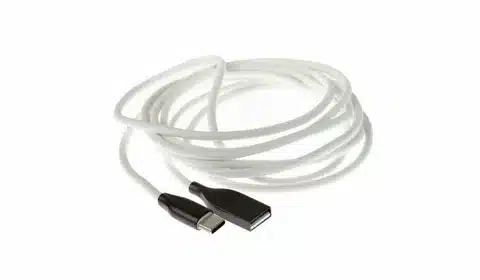
This manual disaggreggregates the precise length constraints and maximum cable length of each USB version and exposes the time proven procedures to extend your cables, safely and efficiently, without compromising performance of any usage.
Understanding USB Length Limits by Version
USB versions of different lengths are characterized by different data transfer rates and power needs. Here’s what you need to know:
USB 1.0 and 1.1 supports no more than 3 meters per cable section according to the usb standard . This can be extended to about 18 meters in total with powered hubs maximum usb cable length. These are older more relaxed-length standards because they have slower data rates of 12 Mbps.
USB 2.0 supports a maximum of 5 meters in each cable section. This edition, including usb 3.2 gen, balances speed (480 Mbps) with range, and is thus appropriate in most domestic and corporate uses.
USB 3.0 and 3.1 (SuperSpeed) is best performed at less than 3 meters. The extremely fast growth in data speeds (5-10 Gbps) implies that the signals decay faster with distance, especially with longer cable lengths .
USB 3.2, USB4, and Thunderbolt are much more limited, typically to the order of 0.8 meters with USB4 because of their very high data rates of up to 40 Gbps. These advanced standards are more fast speed than distance usb cable max length.
The continuum is straightforward: the more the USB technology develops and its speeds, the shorter are the maximum cables. This trade-off controls integrity of signals and guarantees reliability that users have in USB connections.
Why These Length Restrictions Exist
USB length constraints are not random–they are grounded on some underlying electrical and timing principles that make data transfer reliable.
Signal degradation The main offender is signal degradation. Electric signals on wires composed of copper weaken and distort naturally as they run through the wires usb cable depends. This is also increased with longer cables resulting in corruption of data, especially with active usb extension cables , loss of connection or loss. This is especially vulnerable to higher-speed protocols such as USB 3.x and USB4, which employ more complicated signaling schemes.
Timing constraints USB protocols are time sensitive and devices must meet rigorous response-time requirements. These timing specifications can be broken by longer cables adding delays which can result in a communication breakdown between your devices usb c cable.
Standard compliance means that they are universally compatible. USB Implementers Forum sets these limits to ensure that any compliant device, equipped with a usb connector, would be interoperable with any compliant usb host cable and hub configuration. Going beyond these boundaries will be successful in certain cases but can lead to erratic conduct usb port.
These technical reasons give one a better idea on why the simple purchase of a longer cable does not usually work out, and why one should always use correct extension techniques to ensure a good connection fiber optic cables.
Proven Methods to Extend USB Cable Length
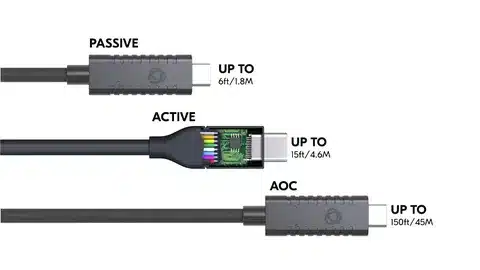
Luckily, there are a few trusted techniques of making USB extend to lengths well beyond the limits of standard cables without losing signal and performance length of a usb.
Self-powered USB hubs USB hubs that are self-powered can behave as signal regenerators, which resets the length limit at every hub. A quality powered hub will give your total reach success of about 30 meters due to the provision of fresh power and signal amplification active extension cables. External power adapters on hubs should always be used to use as extensions as opposed to bus-powered hubs data transfer speeds.
Active (repeater) cables come with inbuilt signal boosters that enable amazing extensions- up to 30 meters USB 2.0 wire and about 18 meters USB 3.x wire. These special cables are also more expensive than passive counterparts but offer good performance and help to maintain signal quality in long distances.
Hub chains obey the USB tier rule–you can run up to 5 hubs in chain, and the total cable length will reach about 30 meters. All the hubs will have to be self powered and you will have to ensure you have good quality cables between each segment to ensure a good signal.
USB over Ethernet extenders extenders are the gold standard of long distance USB. These systems should be used to convert USB signals into Ethernet protocols that will provide reliable connections at 100 meters with standard Cat5e or Cat6 network cables. They are ideally suited to industrial purposes or inter-building devices.
Fiber optic and specialized conversion systems Hundreds of meters, or even miles, in specialist systems can be made using fiber optic and special conversion systems. Though costly, these solutions are needed in applications such as remote monitoring, industrial automation or interconnection of devices over large facilities.
Quick Reference: Extension Methods Comparison
| Method | USB Version | Max Length (Approx.) | Best Use Case |
| Passive Cable | USB 1.x / 2.0 | 3 m / 5 m | Standard desktop setup |
| Passive Cable (SuperSpeed) | USB 3.x | ~3 m | High-speed short connections |
| Active Cable / Repeater | USB 2.0 | ~30 m | Extended home/office use |
| Active Cable / Repeater | USB 3.x | ~18 m | Professional applications |
| Self-Powered Hub Chains | USB 2.0 / 3.x | ~30 m total | Multi-device setups |
| USB over Ethernet | USB 2.0 / 3.x | ~100 m | Cross-building connections |
| Fiber / Proprietary Systems | Advanced | 100 m+ | Industrial / specialized use |
This analogy will assist you to pick the appropriate solution depending on your unique distance needs, USB version, and application needs.
Best Practices for Extended USB Connections
The key to successful use of long USB connections requires time-tested best practices and quality parts all along your installation.
Choose high-quality cables with proper shielding and robust connectors. Low-cost standard usb cables commonly have low-quality copper, insufficient shielding or substandard materials that are more of an issue at greater distances, particularly concerning low-cost standard usb cables . Invest in cables from reputable manufacturers with proper certifications.
Match cable specifications to your device requirements. USB 3.0 devices can only be used through a USB 2.0 cable and this reduces the speed to that of USB 2.0. Equally, make sure that your extension method can provide all the benefits of your fastest device.
Prioritize powered solutions for any usb extension cable beyond standard limits. The signal regeneration required to ensure high-performance long-distance connections is achieved with self-powered hubs and active cables signal loss. The failure of bus-powered hubs is common in long extension applications because of power insufficiency.
Respect the hub tier rule Obey the hub tier rule, restricting the chain of hubs to 5 tiers. This USB specification guarantees an adequate enumeration and power allocation in your extended system.
Consider environmental factors as electromagnetic interferences, temperature variation and physical stress to cables. Specialized shielded cables or fibre solutions can be necessary within industrial environments to ensure a high degree of reliability.
In very long runs, more than 30 meters, consider using Ethernet based extenders or fibre-based solutions rather than trying to chain many hubs, which becomes progressively unreliable at long ranges recommended maximum length.
There are good technical reasons why USB cable length is a limit, and have nothing to do with insurmountable barriers. By using the appropriate extension techniques you can easily add USB devices capable to transfer data at a distance of virtually any distance your application needs., with the proper extension techniques you can reliably extend the use of USB devices.
The trick here is to use the extension technique that best suits your application: simple powered hubs are used to extend over a moderate distance, active cables are used when higher speeds must be quoted, and Ethernet or fiber extenders are used when long distances must be achieved. High quality parts and installation provide years of quality service.
Willing to eliminate your USB extension problems? Find out about high-quality USB cables, powered hubs, and extension products with the power delivery performance and reliability your applications need. What is your most difficult USB connection predicament?– we want to know in the comments below!
Conclusion
Understandable usb cable distance limitations are very important for reliable data transfer and power delivery productivity. However, different usb versions have their own maximum lengths: 3–5 meters for standard cables and about 1 meter for the fastest USB4. The length still saves the integrity of signals and avoids data loss or inefficiencies in charging. Fortunately, there are reliable solutions such as active repeater cables, powered hubs, USB-over-Ethernet adapters, and fiber optic systems that can stretch USB connectivity beyond its original specifications all without compromising quality. It is a matter of identifying the appropriate means of extension according to one’s particular need, investing in certified high-quality cables, and adhering to the appropriate best practices for ensuring safe, stable, and long-lasting connections. This will allow one to set up anything-from a small home office to a big industrial infrastructure-understanding the distance limits that USB imposes.