
Introduction: Set the Stage
You may have never thought about it but why does your iPhone have that thin, reversible connector, such as a lightning adapter, and why are Android devices using different ports? It is as simple as knowing Lightning cables which is Apple progeny cables that have charged and transferred data to their millions of devices over 10 years.
Lightning cables are much more than chargers of an iPhone They are used to easily transfer data among your Apple devices and computers, connect related accessories and even send audio to headsets and speakers. You use the lightning cables daily to charge your phone or bring that last vacation away and on days when you have to maximize the use of your gadgets, Lightning cables are saviors.
So in this ultimate guide we are going to see all about Lightning cables and their data transfer speeds so that we can accurately present their features, point out their types, their compatibility, future trends in this field. Then we will compare them with other connector varieties and select the most appropriate Lightning cord to your needs.
What Is a Lightning Cable?
Lightning is a technology of proprietary connectors, which was introduced by Apple in September 2012 with the iPhone 5. This innovative connector was a replacement to the bulky 30-pin dock connector and works seamlessly with the apple usb power adapter commonly used by Apple that was sleeker and friendlier to use and this brought fundamental changes in the way we relate with our devices.
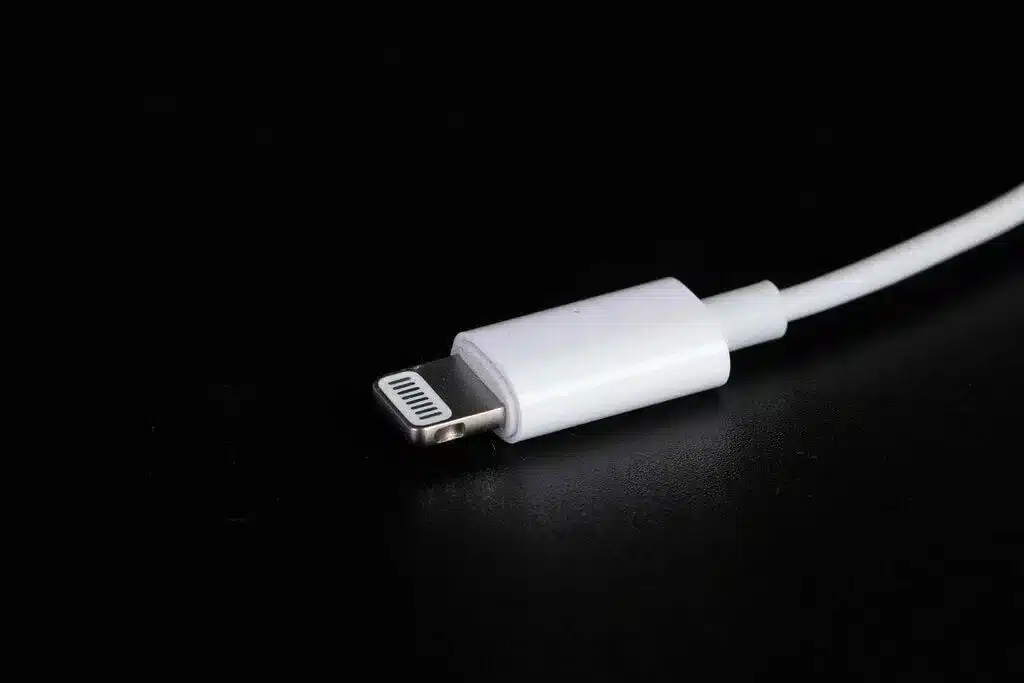
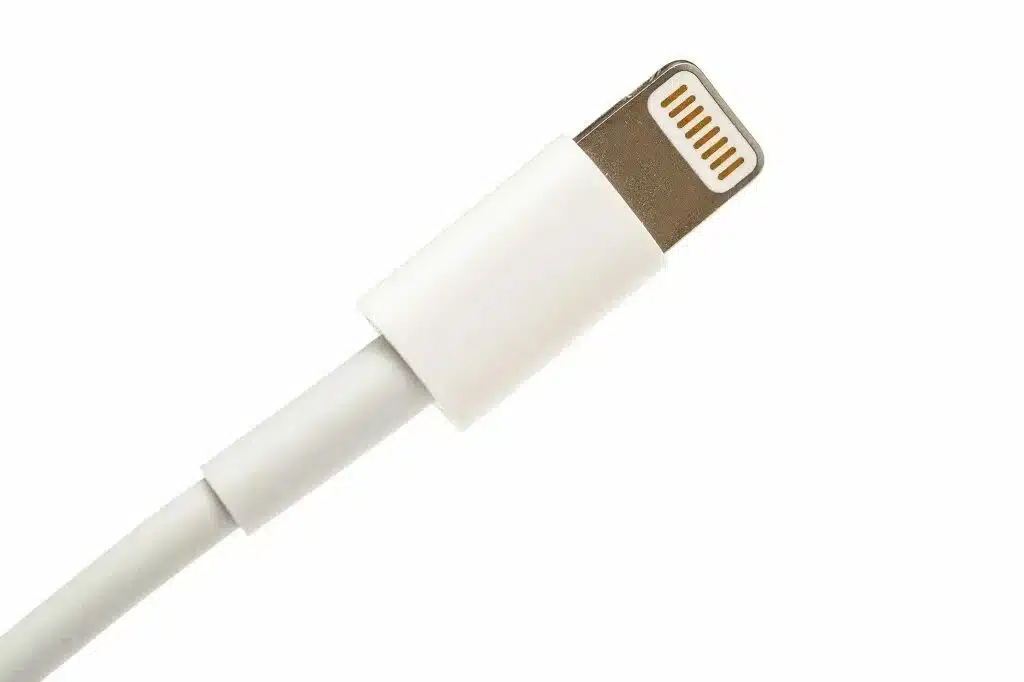
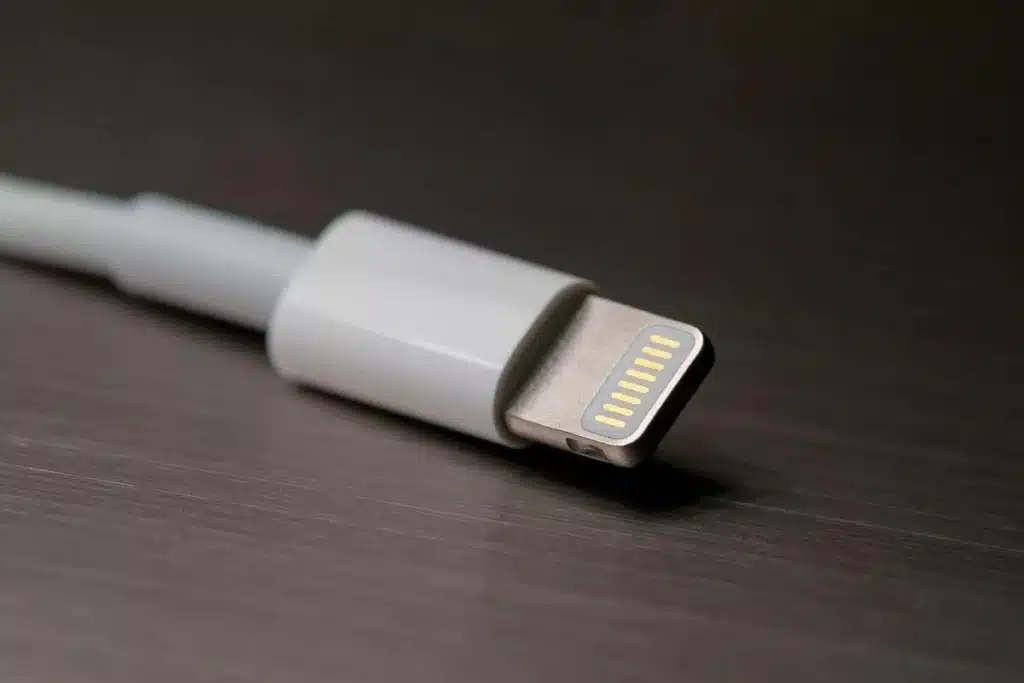
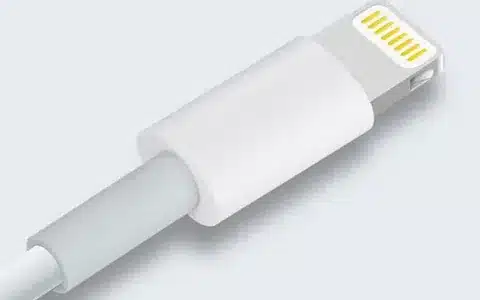
Lightning connector has a distinctive structure of 16 pins that comprises on each side 8 contacts making the connection to be the same in both directions. Such reversible design was innovative at the time and contributed to convenient charging. , and it was designed to do away with the annoyance of trying to fix the cables in the dark or dangling with them to finally find the correct orientation.
Technically the Lightning cables use USB 2.0 data transfer protocol, which is compatible with usb battery chargers. and they support a data transfer rate of up to 480 Mbps. Although this might sound meager by the modern capabilities, it was quite sufficient to the smartphone use of 2012 and still remains more than enough to satisfy the charging and syncing needs of the majority of users.
Types of Lightning Cables
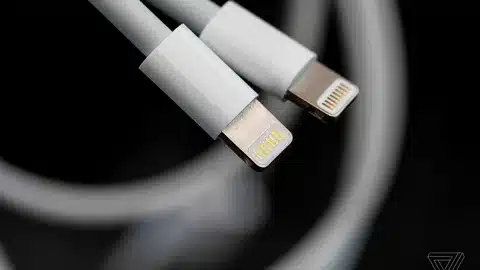
Lightning cables have a number of subtypes that have unique characteristics, which may also be compatible with other devices :
Standard Lightning (USB-A to Lightning)
Lightning cable Standard Lightning cable This is the most typical model of Lightning cable that is safe and tested as a genuine with MFi certification. It finds a wide application in charging and in the transfer of data.
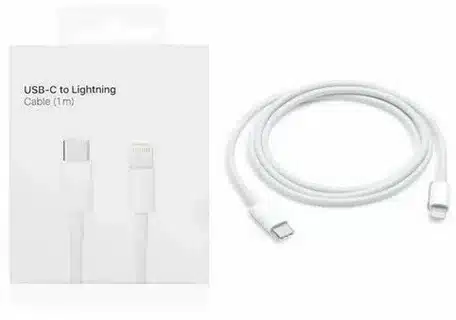
USB-C to Lightning
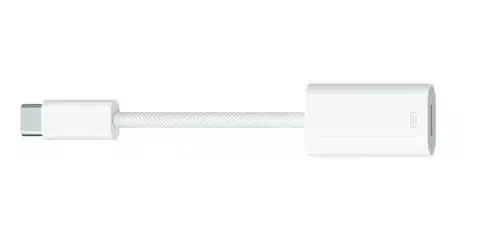
The popularity of this type is increasingly growing because of USB-C prevalence in the latest devices. The USB-C to Lightning cable also supports faster charging thanks to the usb c connector. should a user have a compatible charger and speed is an important factor.
Coiled Lightning Cable
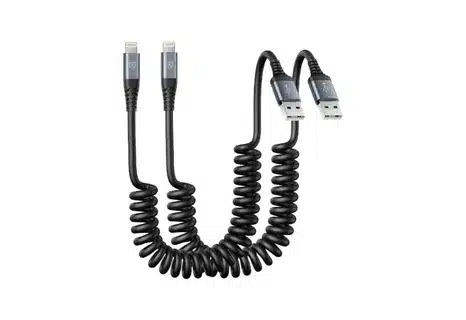
A space-saving, easy to tangle-free, Coiled Lightning cable stretches and retracts, as and when needed. This is perfect in the event that the user would like to have their cables neatly laid out where they can be picked easily.
Lightning to 3.5 mm Audio Adapter
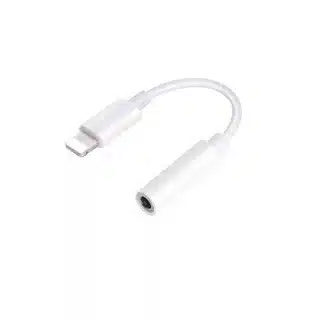
In plugging in many Apple devices, the Lightning to 3.5 mm Audio Adapter would help users to connect to wired audio devices since many of Apple devices have had their headphone jacks removed.
What Can You Do with Lightning Cables?
Charging Your Devices
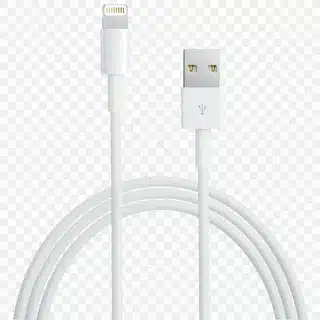
Lightning cables have the main peculiarity to charge your Apple devices. Your iPhone or iPad can be charged in many ways: wall adapters, portable power banks, computer USB ports or even car chargers. Lightning charging offers versatility that is simple to use everywhere so when you are not at home, you are not left without power.
Lightning cables are compatible with both standard charging and fast charging when coupled with the suitable power adapters. Fast charging has the potential to save many hours as you would require less time to charge your device; thus valuable when it comes to busy lifestyles.
Data Transfer and Syncing
Lightning cables do perform best in data synchronization of Apple gadgets with computers. You can transfer photos, your iPhone device to your Mac easily, Backup, or Sync music and Videos. USB 2.0 protocol delivers stability of file transfers and its transfer rates are low in contrast to newer specifications.
The option is especially helpful in the case of image and video files that the content creator needs to transfer, or, users wanting to dissociate wirelessly synced files with cloud storage and choose wire route due to security and/ or dependability related concerns.
Audio Transmission
This is a fast and efficient transfer of digital audio signal and is needed to connect to speakers, audio interfaces, and other audio devices. This was of particular value following the decision by Apple to eliminate headphone ports on their products.
Professional audio accessories are now increasingly available with Lightning compatibility, including the magic trackpad. to enable musicians and audio professionals to connect directly to their iOS devices to record, monitor or use in playback functionality.
Accessory Connectivity
Besides just charging and data transfers, the Lightning cables lead to a variety of accessories being attached to the Apple devices. Lightning connection means you can expand your device to include game controllers, keyboards, specialized cable connections and tools, and much more.
Pros and Cons at a Glance
Pros:
- Reversible Design: The reversible connector makes the process easy to connect.
- MFi Certification: Certifies safety and functionality to give comfort to users.
- Fast Charging and Reliable Data Sync: Supports superior charging and sync.
Cons:
- Fragility Concerns: Cables can fray or wear and tear with time thereby causing durability problems.
- Limited to Apple’s Ecosystem: Becoming majorly restricted to Apple systems, and do not work well with other products.
- Slower than USB-C: Doesn t have the future-proof speed and power capabilities of USB-C.
Devices Compatible with Lightning
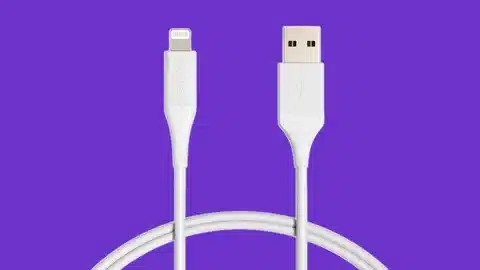
Lightning compatibility will cover a large number of Apple devices, but the company is slowly adding USB-C. Lightning ports are featured in iPhone models starting with the iPhone 5 and ending with the iPhone 14, as well as all of the iPhone SE.
Quite a number of iPad models continue to use Lightning connectivity, especially with older ones as far as the 9 th generation iPad. But the latest iPad pro and iPad air models have switched to USB-C to enjoy some additional features as well as universal connectivity.
Lightning connectivity is also used on Apple accessories such as the 1st generation Apple Pencil, older AirPods charging cases, and pre-2024 Magic Keyboard, Magic Mouse, and Magica Trackpad. The product releases from Apple in recent times, however, show a strong trend towards the adoption of USB-C to all of their ecosystem.
Lightning vs. Other Cable Types
Comparing with other connector standards, the following differences come to fore:
To gain even more insight into the difference, here is a brief comparison table between Lightning, Micro-USB and USB-C:
| Feature | Lightning | Micro-USB | USB-C |
|---|---|---|---|
| Reversibility | Yes | No | Yes |
| Durability | Moderate | Moderate | High |
| Speed | Up to 480 Mbps | Up to 480 Mbps | Up to 10 Gbps |
| Power Delivery | Limited | Limited | High (up to 100W) |
| Device Compatibility | Apple devices only | Widely compatible | Universal |
Reversibility: Lightning has the feature of reversible design in common with USB-C, whereas Micro-USB has to be plugged in a certain way, which makes the latter less convenient to handle than Lightning and USB-C.
Durability: USB-C USB-C usually has a longer life span than Lightning connectors and Micro-USB connectors are susceptible to wear and loosening.
Transfer Speed: USB-C also has superior data transfer rates than the Lightning and Micro-USB ports with some implementations reaching speeds as high as 40 Gbps, in contrast to the 480 Mbps limit of Lightning.
Power Delivery: USB-C has a superior power delivery capability with up to 100W+(more) at its disposal, compared to the Lightning that only has the smartphone/tablet power charging needs.
Device Compatibility: USB-C is universal, and can be used on any device or across manufacturers vs. Lightning which can only be used on Apple devices, and Micro-USB which has all products moving to USB-C.
Choosing the Right Lightning Cable
Assessing Your Speed Needs
Think about your necessity to have basic charging or fast charging capabilities If you regularly have to charge your phone/device, then you should spend a bit of money on a USB-C to Lightning cable and a fast-charging adapter.
A regular USB- Lightning connector will be fine to charge overnight or to use occasionally and may be cheaper than specialized high-speed cables.
Determining Optimal Cable Length
Cable length is also greatly affecting usability and convenience. Supply, shorter cables (3 feet or less) are best suited to charging with power banks and car chargers; longer cables (6+ feet) are ideal when using at home or in the office.
Think about your intended use cases: bedside charging will need longer cables, whereas travel charging is best served alongside short-balanced cables that minimise bulk and have reduced tangling properties.
Material and Build Quality
When shopping ask to look at cables that have reinforced connectors and strong materials such as nylon braided cable or TPE coated cable. Such materials are more difficult to fray, preserving cable life expectancy and in the end offering greater value even though initial pricing may be slightly higher.
It is not necessary to obtain very cheap cables that can be defective in shielding or of poor quality that can damage devices, or be unsafe.
Connector Type Considerations
USB-C or USB-A port: You will have to decide which type of port (USB-A or USB-C) you need depending on your charging ecosystem. If you own chargers or newer laptops, power banks with USB-C ports then USB-C to Lightning cables are more future-proof and they can charge faster iphone or ipad models.
USB-A to Lightning cables are still useful when needing to be compatible with older chargers and computers; these cables make good secondary or backup cables.
Certification and Brand Trust
Always give emphasis on MFi-certified cables that are offered by reliable manufacturers. Although they are more expensive than the uncertified options, they are compatible, safe, and reliable. Uncertified cables may destroy your devices, give sluggish performance, or fail to work after an iOS update apple lightning.
Do research manufacturer warranties and customer reviews to judge long-term reliability and customer service competency.
The Future of Lightning Cables
Lighting technology has an unclear future with Apple gradually moving toward USB-C in all of their products. This change may happen sooner due to the European Union mandate of USB-C charging port on mobile products external monitors.
The number of existing devices that are Lightning-compatible are still in the millions and will continue to drive demand in Lightning cables in the near future. Apple consumers who own several Apple products across generations may still require both Lightning and USB-C cables in the short-term electronic devices.
Conclusion
Lightning cables have supported Apple users since more than ten years and […] Their future is unknown because of the evolution in the industry towards USB-C, yet users still need a durable cable. , but they are still necessary to users of iPhone and iPad usb c power adapter.
Knowing these types of Lightning cables, their features, and drawbacks can assist in making the right decisions to buy. Looking to shop a Lightning cable? Check out the basic charging cables, or specialized offerings such as fast charging cables, audio transmission cables and more ipod touch.
With technology ever-evolving, keeping up to date with connector specifications and compatibility means you can be ready to make a shift to the future, as well as making the most of your existing devices apple usb c.
FAQ Section
Can Lightning cables be used on non-Apple devices?
No, Lightning cables only work with Apple devices because this cable uses a proprietary connector and must be MFi certified lightning devices. They will not physically plug back in and operate with Android phones, tablets or other non-Apple devices.
What’s the difference between Lightning and USB-C?
Lightning is an Apple connector, with a data rate limited to 480 Mbps, whereas USB-C can reach a data rate of up to 40 Gbps, and offers much increased power delivery (up to 100 W and more). USB-C is reversible similar to Lightning but has even more compatibility with devices across manufacturers wall outlet.
How to identify a Lightning cable physically?
Lightning connector Lightning connectors are flattish and rectangular with rounded corners. Distinctively they include a metallic connector which has 8-pin on each side and the total number of pins is 16 wireless charging case. Connecting, the connector is much smaller than USB-A, but slightly larger than USB-C, and may often be labeled with the Lightning or Apple brand.
Why is Apple transitioning to USB-C?
Apple is upgrading to USB-C to meet the European Union standards of having universal charging standards, faster speed of data transfer, supporting increased power delivery, and much compatibility with the current accessories and devices used in the technology eco-system mac mini.