
Author name: Wang Palle

As the third employee of Dongguan Kingda Electronic Technology Co.,Ltd, Palle Wang has grown together with the company since its early days. She currently serves as Blog Editor, where she oversees the creation and publication of technical content related to high-speed transmission cables, including MCIO PCIe Gen5, SAS, OCuLink, QSFP/SFP, and USB4 solutions. With a strong background in technical writing and digital content management, she ensures that Kingda’s blog not only reflects the company’s engineering expertise but also provides valuable insights to global customers, engineers, and partners. Her work contributes to Kingda’s mission of building trust, authority, and transparency in the high-speed cable industry.

Wang Palle
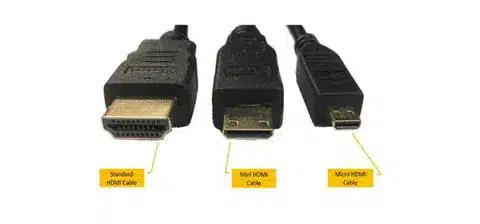
Side by side chart showing HDMI cable types with connector examples
Uncategorized

HDMI Cable Types: Your Complete Guide to Choosing the Right Connection

This guide breaks down the different HDMI cable types and helps you choose the right one based on your devices and performance needs. Standard HDMI cables handle basic HD content, while High-Speed HDMI supports Full HD and 4K, and Premium High-Speed ensures smoother 4K at higher refresh rates with HDR. For cutting-edge setups, Ultra High-Speed HDMI cables certified for HDMI 2.1 deliver up to 48 Gbps bandwidth, enabling 8K resolution, 4K at 120Hz, eARC, and advanced gaming features. The article also covers special variants like HDMI with Ethernet and automotive HDMI. By understanding the differences in speed, resolution, and features, you can confidently pick the right cable for streaming, gaming, or professional displays.
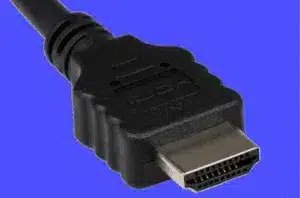
close-up of HDMI cable connector with visible pins
Uncategorized

Do HDMI Cables Matter? The Truth About Cable Quality

The guide clears up the debate on whether HDMI cable quality really matters, explaining that for most users, an inexpensive certified cable delivers the same video and audio quality as a pricey one—since HDMI transmits a digital signal that either works or doesn’t. However, cable quality does matter when it comes to durability, build materials, and supported features. High-quality cables are less prone to wear, interference, and connection drops, and they’re often required for demanding setups like 4K at 120Hz or 8K with HDMI 2.1 features. The key takeaway is that you don’t need to overspend, but choosing a properly rated, well-built cable ensures reliable performance, especially for gaming, home theaters, and future-proofing.

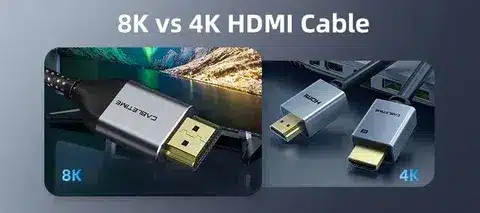
Side by side image showing difference between 4K HDMI cable and 8K HDMI cable
Uncategorized

4K vs 8K HDMI Cables: How Much Do You Know?

The guide explains the differences between 4K and 8K HDMI cables, focusing on bandwidth, performance, and future compatibility. While both support Ultra HD content, 4K HDMI cables are optimized for resolutions up to 4K at standard refresh rates, making them sufficient for most TVs, streaming, and gaming setups today. 8K HDMI cables, built to meet the HDMI 2.1 standard, offer far greater bandwidth—up to 48 Gbps—which supports 8K resolution at 60Hz, 4K at 120Hz, HDR, and advanced gaming features like Variable Refresh Rate (VRR). Even if you don’t own an 8K display yet, choosing an 8K-certified cable can make your setup more future-proof, ensuring it handles the latest consoles, graphics cards, and streaming devices without limitation.

Wireless router with Ethernet cables connected, providing internet through modem cable
Uncategorized

Cable Modems Demystified: How They Work, What to Look For, and Choosing the Right One

This guide breaks down everything you need to know about cable modems, from how they work to what features matter most when buying one. A cable modem connects your home to the internet by translating signals from your internet service provider (ISP) into data your devices can use. Key factors to consider include DOCSIS standards (with DOCSIS 3.1 offering faster speeds and better efficiency), speed compatibility with your internet plan, the number of channels for data throughput, and whether to choose a standalone modem or a modem-router combo. By understanding these essentials, users can pick the right modem that ensures reliable performance, faster speeds, and long-term compatibility with future ISP upgrades.

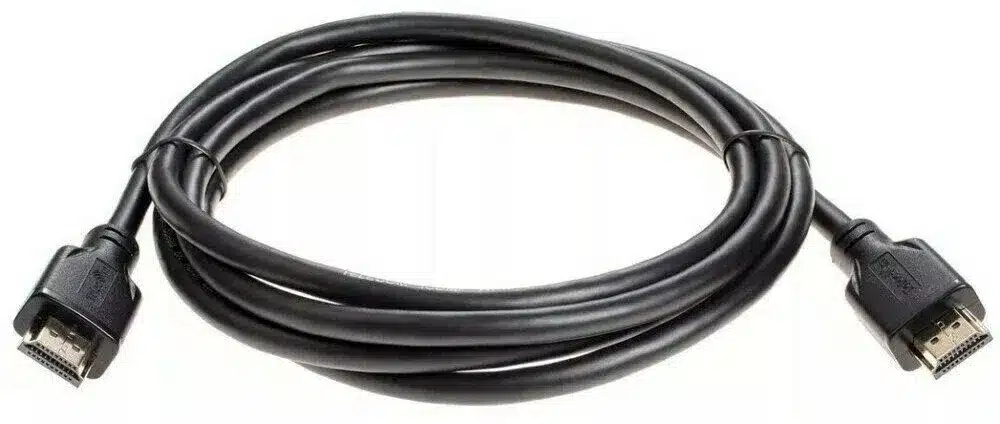
Extended HDMI 2.1 cable for 4K and 8K high definition setups
Uncategorized

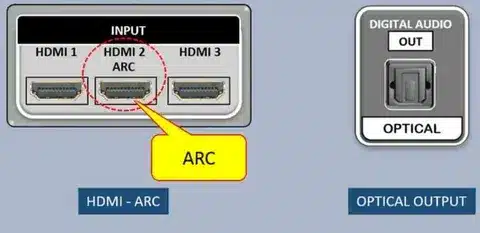
What Is HDMI 2.1? The Future of High-Speed Connectivity

HDMI 2.1 is the latest evolution of the HDMI standard, delivering higher bandwidth and advanced features that make it ideal for next-generation entertainment and gaming. Supporting up to 48 Gbps, HDMI 2.1 enables 8K resolution at 60Hz, 4K at 120Hz, and even higher refresh rates for smoother gameplay, along with features like Dynamic HDR, Variable Refresh Rate (VRR), and Enhanced Audio Return Channel (eARC) for immersive sound. The guide explains how these improvements enhance everything from movies to competitive gaming while ensuring compatibility with future devices. As more TVs, consoles, and graphics cards adopt the standard, HDMI 2.1 is set to become the backbone of high-speed, high-quality digital connectivity.

laptop charging via USB-C cable and adapter
Uncategorized

USB-C Not Charging Laptop? 4 Simple Fixes That Actually Work

When a laptop isn’t charging through its USB-C port, the issue is often simpler than it seems. This guide outlines four practical fixes: first, check whether the charger and cable support USB Power Delivery (USB-PD) and provide enough wattage; second, inspect the USB-C port and cable for dirt, damage, or loose connections; third, update or reset power and battery drivers to resolve software glitches; and finally, test with a different certified charger or cable to rule out hardware faults. By following these steps, most USB-C charging problems can be solved quickly without needing professional repair, ensuring laptops stay powered and ready for use.

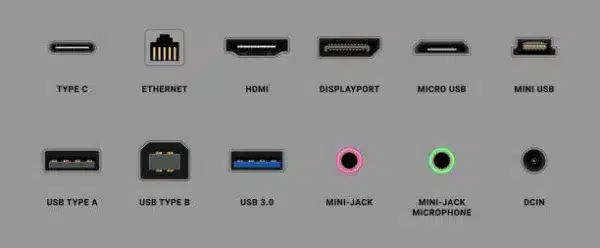
diagram of Type-C, HDMI, DisplayPort, USB-A, USB-B, USB 3.0, Ethernet, and audio ports
Uncategorized

Monitor Ports Guide: Choose the Right Connection for Your Setup

The guide helps users understand the different monitor ports available today—such as HDMI, DisplayPort, USB-C, VGA, and DVI—and explains how to pick the right one based on performance needs. HDMI is widely used for convenience and compatibility, DisplayPort offers higher refresh rates and resolutions ideal for gaming, and USB-C delivers both power and video in a single cable for modern laptops and monitors. Legacy options like VGA and DVI are becoming less common but may still be useful for older devices. By comparing each port’s video quality, refresh rate, audio support, and device compatibility, the guide ensures users can build a setup that balances clarity, speed, and efficiency for work, gaming, or entertainment.

RF cables with additional adapters for connection versatility.
Uncategorized

Demystifying RF Cables: Types, Uses, and How to Keep Them Performing

RF cables can be considered as simple parts, yet this is one of the most important aspects of how your system will perform. The only distinction between success and failure is that you must be aware of the types that are available, what specifications to use on your application, and what maintenance you must perform.
Some of the most useful lessons that need to be remembered are: matching impedance requirements, environmental factors, investing in quality where it’s most needed, and maintaining your cables clean at all times so they will never fail you in the long term.
Whether it is to design a new system or to address an issue with an existing system, you will discover that these are the neglected aspects that will make or break a business.

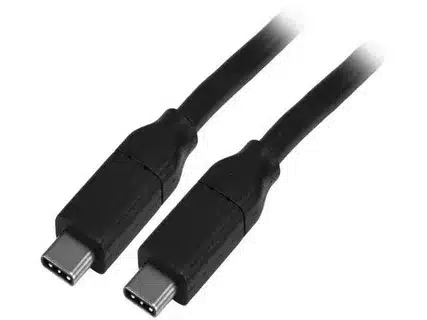
Reliable black USB-C to USB-C cable for charging laptops and phones.
Uncategorized

The Complete Top-Rated USB-C Cables Guide: Avoiding Costly Mistakes and Choosing Safe, High-Performance Cables

The conclusion is straightforward enough; there is no longer a need to explain why modern technology requires good USB-C cables as an infrastructure. They purchase good and valuable equipment, allow maximum use, and provide comfort through a good, certified building. When buying electronic gadgets, which are considered to be big investments, making the right choice in terms of cables used in the product is a significant decision maker that will define the short-term and long-term functionality of the product.

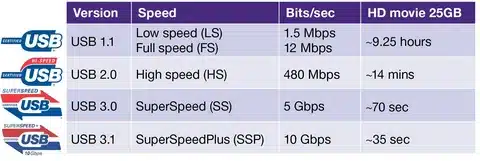
USB 2.0 vs USB 3.0 vs USB 3.1 cable speed comparison
Uncategorized

Type C vs USB 3.0 Speed: The Ultimate Comparison Guide

The guide clarifies the common confusion between USB Type-C and USB 3.0, explaining that one refers to the connector shape (Type-C) while the other defines the data transfer standard (USB 3.0). A USB-C port can support different speeds depending on the USB version it uses, meaning not all Type-C cables are necessarily faster. USB 3.0 offers transfer rates up to 5 Gbps, while newer standards like USB 3.1, 3.2, and USB4—often paired with Type-C—deliver much higher speeds and power delivery. The article emphasizes checking both the connector type and the protocol to ensure you get the expected performance, especially for tasks like fast data transfer, high-resolution video output, and rapid charging.

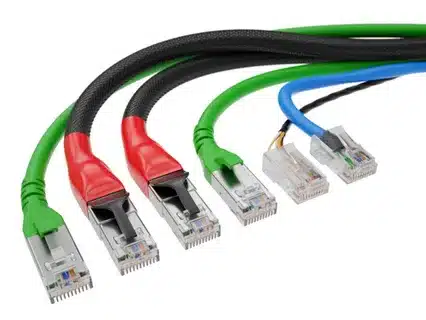
shielded Ethernet data cables with RJ45 connectors for fast networking
Uncategorized

Data Cable vs. Charging Cable: How to Tell—and Why It Matters

Although they may look the same, data cables and charging cables serve different purposes, and knowing the difference saves time and frustration. A data cable has the extra internal wiring needed for both file transfer and charging, making it essential for tasks like syncing phones, updating devices, or connecting peripherals. A charging cable, on the other hand, is built solely for power delivery, which means it can charge your device but won’t transfer information. The guide explains simple ways to tell them apart—such as testing with a computer or checking labeling—and highlights why it matters: using the wrong cable could mean slower charging, no data transfer, or incompatibility with certain devices. Understanding these differences ensures you always get the right performance for your needs.

Scroll to Top

GET A QUOTE